
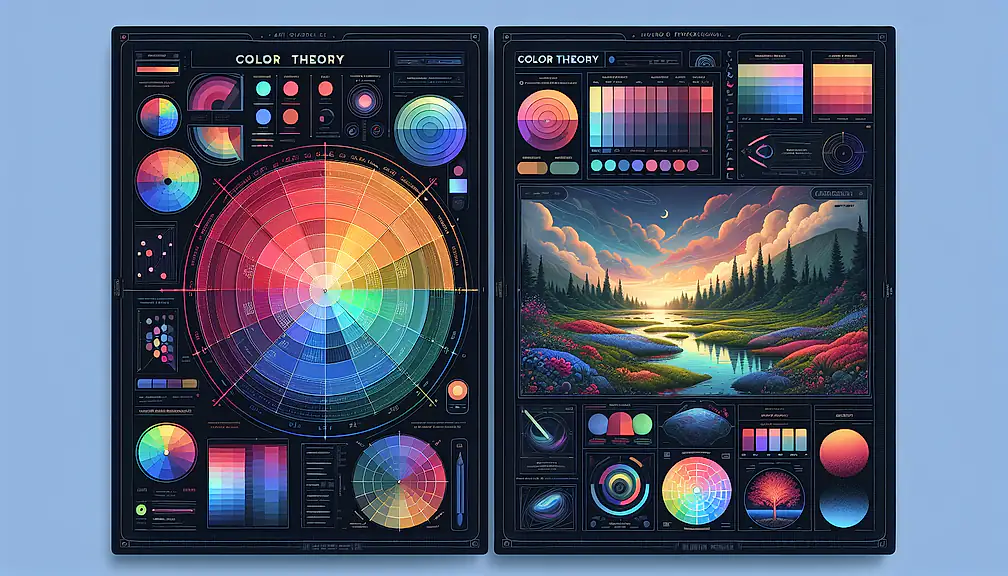
Understanding Color Psychology in AI Art
Before we dive into specific techniques, let's understand how colors affect emotions and how we can communicate this to AI. Different colors evoke different feelings, and understanding these associations is crucial for creating impactful art.
- • Warm colors (red, orange, yellow) - Energy, passion, warmth
- • Cool colors (blue, green, purple) - Calm, serenity, mystery
- • Neutral colors (white, black, gray) - Balance, sophistication
- • Pastel colors - Gentleness, youth, spring feelings
Creating Cohesive Color Palettes
A strong color palette is the foundation of any striking artwork. Let's explore how to create and communicate color palettes to AI effectively.
Color Palette Examples:

Monochromatic:
'serene landscape in shades of blue, from deep navy to light azure, morning mist adding white highlights, professional color grading::1.2'

Complementary:
'autumn scene with orange and blue color scheme, fallen maple leaves against clear sky, dramatic complementary colors, professional photography::1.2'

Analogous:
'magical forest in harmonious greens and teals, touches of blue, soft golden light filtering through leaves::1.2'Color and Mood Creation
Colors are powerful tools for setting the mood of your artwork. Let's explore how to use color to create specific atmospheres and emotional responses.
Mood Examples:

Dramatic:
'stormy seascape, dark moody blues and grays, dramatic white highlights from lightning, high contrast, cinematic color grading::1.2'

Peaceful:
'zen garden at dawn, soft pastel pink sky, sage green plants, muted earth tones, peaceful atmosphere::1.2'

Mystical:
'enchanted forest, deep purples and teals, glowing mushrooms with bioluminescent blue, mysterious atmosphere::1.2'Time of Day and Lighting Effects
Different times of day create natural color palettes. Understanding these can help you create more realistic and atmospheric images.
- • Golden Hour - Warm oranges and soft yellows
- • Blue Hour - Deep blues and subtle purples
- • Midday - Bright, neutral colors with sharp shadows
- • Twilight - Rich purples and deep blues with remaining warmth
Time of Day Examples:

Golden Hour:
'city street at golden hour, warm orange sunlight casting long shadows, golden reflections in windows, cinematic atmosphere::1.2'

Blue Hour:
'coastal town during blue hour, deep blue sky transitioning to purple, warm yellow windows, peaceful evening mood::1.2'

Midnight:
'moonlit forest, silver-blue moonlight, deep shadow areas, subtle dark blues and purples, mysterious night atmosphere::1.2'
Color Grading and Professional Effects
Professional color grading can elevate your AI artwork to the next level. Let's explore how to achieve various color grading effects through prompts.
Color Grading Examples:

Cinematic:
'urban scene, orange and teal color grading, high contrast, deep blacks, professional cinema look::1.2'

Vintage:
'portrait with vintage color grading, slightly faded blacks, warm highlights, subtle grain, nostalgic atmosphere::1.2'

Fashion:
'fashion portrait, clean color grading, perfect skin tones, slightly desaturated background, magazine quality::1.2'Common Color Mistakes and Solutions
- • Over-saturation → Use terms like 'subtle', 'balanced', 'natural'
- • Conflicting moods → Stick to one emotional theme
- • Unrealistic lighting → Reference natural phenomena
- • Poor color harmony → Use established color schemes
Fixing Common Mistakes:

Bad: 'super colorful bright rainbow everything vibrant'
Good: 'harmonious color palette with controlled pops of vibrant color, professional color balance'

Bad: 'dark moody but also bright and happy'
Good: 'moody atmosphere with subtle hopeful elements, shaft of warm light in dark scene'

Bad: 'blue fire red sky green sun'
Good: 'sunset scene with naturalistic color progression, warm oranges transitioning to cool blues'
Conclusion
Mastering color in AI art generation is about understanding both the technical and emotional aspects of color. Remember that color is a powerful tool for storytelling and emotional impact. Start with basic color relationships and gradually experiment with more complex combinations. Save your successful color prompts as templates, and don't be afraid to study real artwork for color inspiration. With practice, you'll develop an intuitive sense for creating beautiful, harmonious color compositions in your AI-generated artwork.